
UCCRN Showcases ARC3.3 Nature-Based Solutions at Adaptation Futures 2025
From October 13-16, 2025, the 8th biennial Adaptation Futures Conference (AF2025) was held in Ōtautahi Christchurch, Aotearoa New Zealand. AF2025 was hosted by the University of Canterbury Te Whare Wānanga o Waitaha with regional Oceania and international partners, including the Urban Climate Change Research Network (UCCRN).
From October 13-16, 2025, the 8th biennial Adaptation Futures Conference (AF2025) was held in Ōtautahi Christchurch, Aotearoa New Zealand. AF2025 was hosted by the University of Canterbury Te Whare Wānanga o Waitaha with regional Oceania and international partners, including the Urban Climate Change Research Network (UCCRN).
Serving as the flagship event of the UN Environmental Programme’s (UNEP) World Adaptation Science Programme (WASP), this conference series enables international practitioners, policymakers, researchers, and academics to network, collaborate, and learn alongside each other. This year, AF2025 maintained a focus on centering Indigenous knowledge systems, urban resilience, and nature-based solutions (NbS).
During the conference, UCCRN held three sessions presenting the Nature-Based Solutions: Enhancing Capacity to Respond to Shocks and Stresses Element from its Third Assessment Report on Climate Change and Cities (ARC3.3).
Publishing online through Cambridge University Press, UCCRN has iteratively released the first three elements of the series, with the fourth expected to be published in early 2026. The ARC3.3 series provides readers with urban climate change knowledge, tools, and case studies to heighten opportunities for sustainability and resilience in cities worldwide. ARC3.3 is produced by scholars based across the world, connected by the shared goal to help cities successfully act as climate change leaders and implementers.
As discussed in the eighth element of the ARC3.3 series and at the three AF2025 sessions hosted by UCCRN, NbS are gaining attention for their ability to help cities mitigate and adapt to climate change. According to the World Resources Institute, nature-based solutions are “actions to protect, conserve, restore, and sustainably use and manage ecosystems in a way that addresses social, economic and environmental challenges while simultaneously benefitting human well-being and biodiversity.”
Until recently, NbS have been overlooked given the disproportionate amount of attention and finance invested in hard infrastructure. Nature-based solutions include the use of natural features and processes, including reforestation, urban parks, street trees, sustainable urban drainage systems, and community gardens. Understandably, UCCRN’s research regarding NbS was extremely relevant and important for the goals of the Adaptation Futures conference. The three sessions are briefly described below, followed by key takeaways from organizers and presenters.
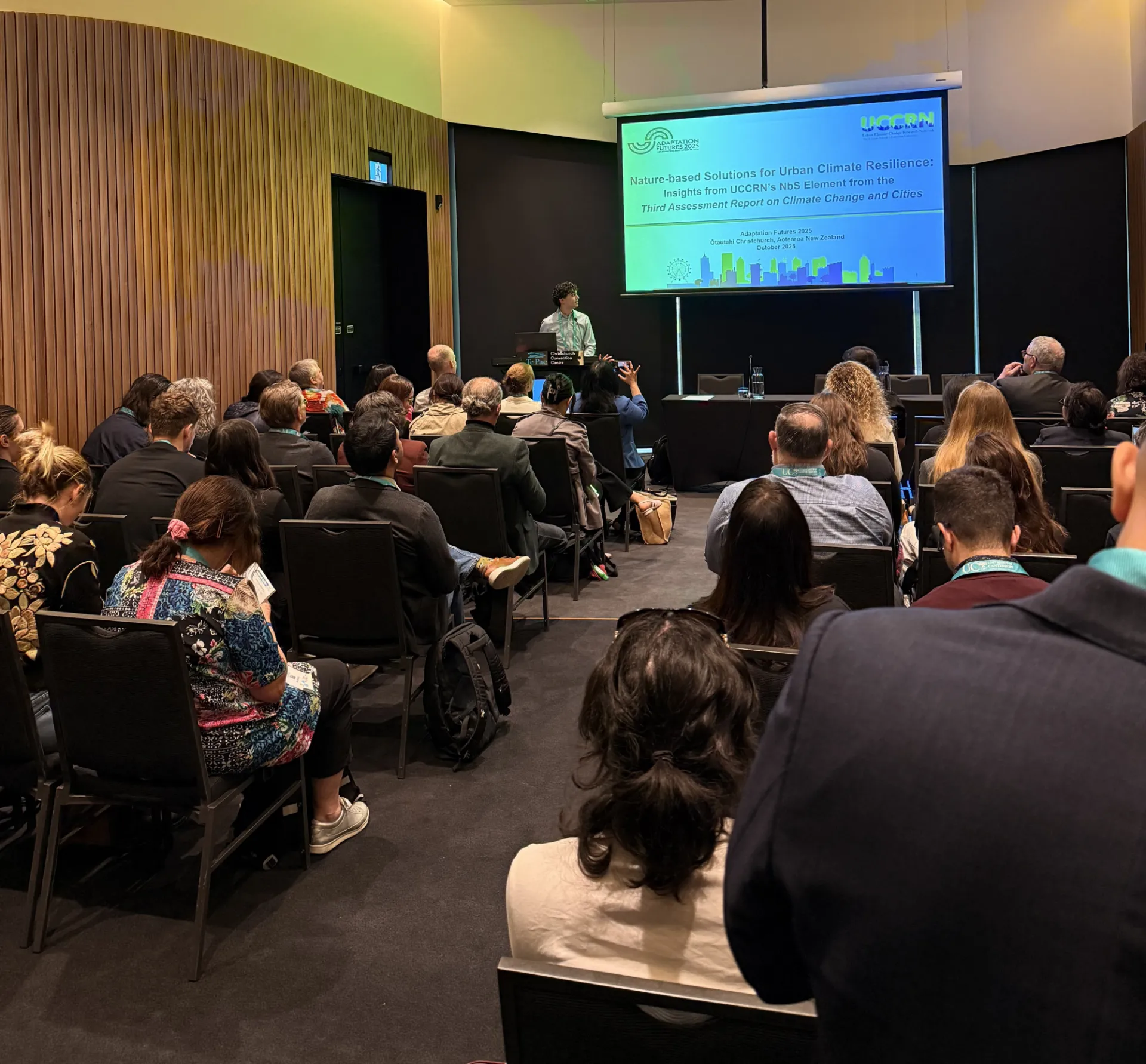
Nature-based Solutions for Urban Climate Resilience: Insights from UCCRN’s NbS Element from the Third Assessment Report on Climate Change and Cities
This session on UCCRN’s ARC3.3 NbS Element occurred on October 15th and consisted of a session introduction, two presentations, and a moderated discussion with audience engagement. Jaad Benhallam, a Staff Associate at the Center for Climate Systems Research at Columbia University and a Lead Author of ARC3.3’s NbS element, served as the panel moderator.
The first presentation covered the Urban NbS Financing Landscape and was led by Manishka de Mel, head of the Nature-based Solutions Pillar at Columbia University’s CSSR and Coordinating Lead Author of ARC3.3’s NbS element. Manishka introduced NbS for cities, exploring their benefits, co-benefits, and synergies, particularly for climate change adaptation and mitigation. At the end of the presentation, four key findings were shared from an analysis of projects in four major donor databases (GEF, GCF, IKI, and AF):
- Between 2000-2024, only 6% of projects were classified as urban NbS.
- Despite the lack of funded urban NbS projects, there remains steady decadal increase, with a 135% increase in urban NbS projects from the 2010s to the 2020s.
- Integration of ecosystem services into NbS is key.
- NbS must be designed in the context of climate change.
The second presentation was led by Dr. Maibritt Pedersen Zari, the Primary Investigator of the Marsden Project NUWAO (Nature-based Urban design for Wellbeing and Adaptation in Oceania) and Coordinating Lead Author of ARC3.3’s NbS element. Maibritt’s presentation covered regenerative and ecosystem-based approaches to sustainable architecture and urban design. Dr. Pedersen Zari discussed how Indigenous knowledge helps us to understand urban relationships with ecosystems in order to leverage NbS for climate resilience and enhance well-being.
UCCRN City Solutions Case Study Atlas: an Innovative Digital Platform for Researchers, Practitioners, and Policymakers
The second session covered UCCRN’s City Solutions Case Study Atlas (City CSA), an innovative digital platform for researchers, practitioners, and policymakers. Dr. William Solecki–UCCRN Co-Chair and Founder Director, Emeritus, of the CUNY Institute for Sustainable Cities–discussed the objectives, methodology, and significance of the City CSA.
The City CSA is an initiative to advance urban climate action through an interactive digital platform that visualizes and geo-localizes diverse climate solutions in cities globally. In addition to informing city and urban practitioners and policymakers, promoting knowledge exchange, and enabling cross-regional learning and collaboration, the City CSA will serve as a rigorous evidence base for researchers and a variety of applications, including the upcoming IPCC Special Report on Climate Change and Cities. Many of the case studies in the City CSA focus on NbS and Traditional Ecological Knowledge, echoing the broader themes of the conference.
Unlocking the Potential of Research Networks to Increase Locally Place-Embedded and Just Adaptation
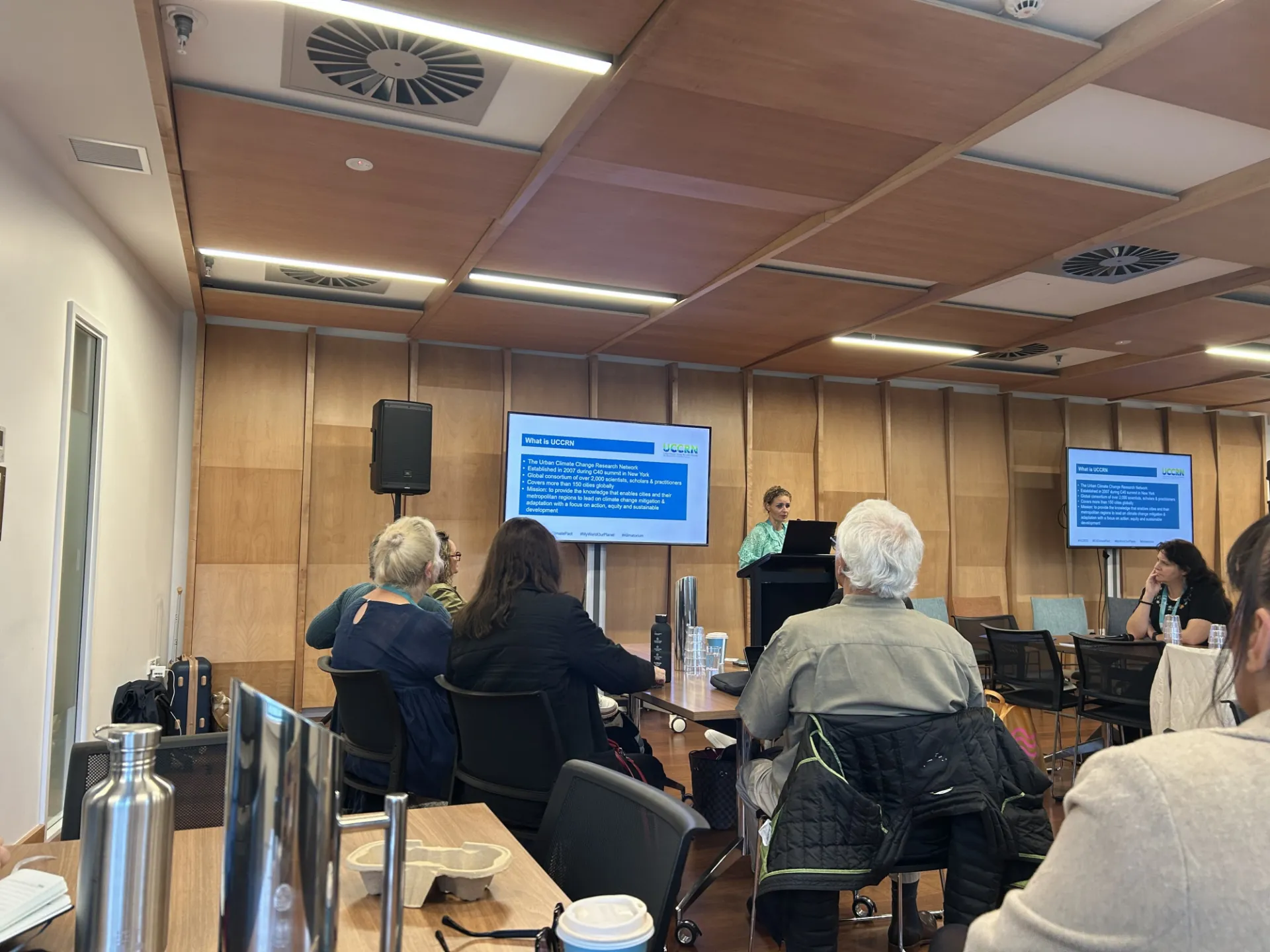
The third session was a presentation led by Sarah Lund, EU Climate Pact Advisor and Director of International Relations and Sustainability Initiatives at Klimatorium, Denmark–and Dr. Pedersen Zari–Associate Professor at Auckland University of Technology’s School of Future Environments–on Indigenous leadership.
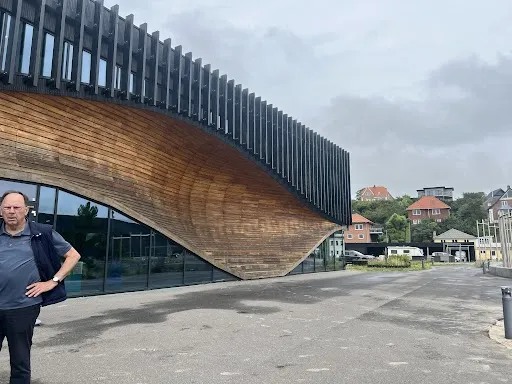
This presentation brought together academics and practitioners of various UCCRN Hubs with the Klimatorium and their partners Wakatū, along with Indigenous experts in Aotearoa who specialize in climate adaptation and justice. Klimatorium is a non-profit organization that promotes cross-border connections and strengthens collaboration across diverse fields to address and act on climate change, aiming to unite global efforts on urban climate change adaptation.
The main objectives of this AF2025 session were to increase awareness of climate justice issues for different groups of people in the context of climate-adaptation research and understand the value of Indigenous or local knowledge systems as drivers of projects and research alongside Western scientific systems. Additionally, this session aimed to foster inclusive dialogue, empower communities to use research knowledge in decision-making, and to establish Klimatorium-like networks to make global research accessible, available, and locally relevant.
Key Takeaways
Based on these AF25 sessions, there were three key takeaways:
- Currently, there are significant gaps in funding for urban NbS projects and implementation efforts. To recognize and address these gaps, attention to funding both large- and small-scale NbS projects will close the gap.
- UCCRN’s City Solutions Case Study Atlas provides one repository for city climate solutions. This consolidation can help decision-makers, practitioners, scientists, researchers, and others apply provided case study examples to their own cities and projects to aid in implementation.
- Integrating Indigenous knowledge in Nature-based Solutions is essential. Indigenous People’s innovations in adapting to climate variability offer critical insights for current climate adaptation. They possess knowledge systems that have guided land, water, and ocean stewardship for generations.