Reflections on the AIANY Launch of Planning, Urban Design, and Architecture for Climate Action
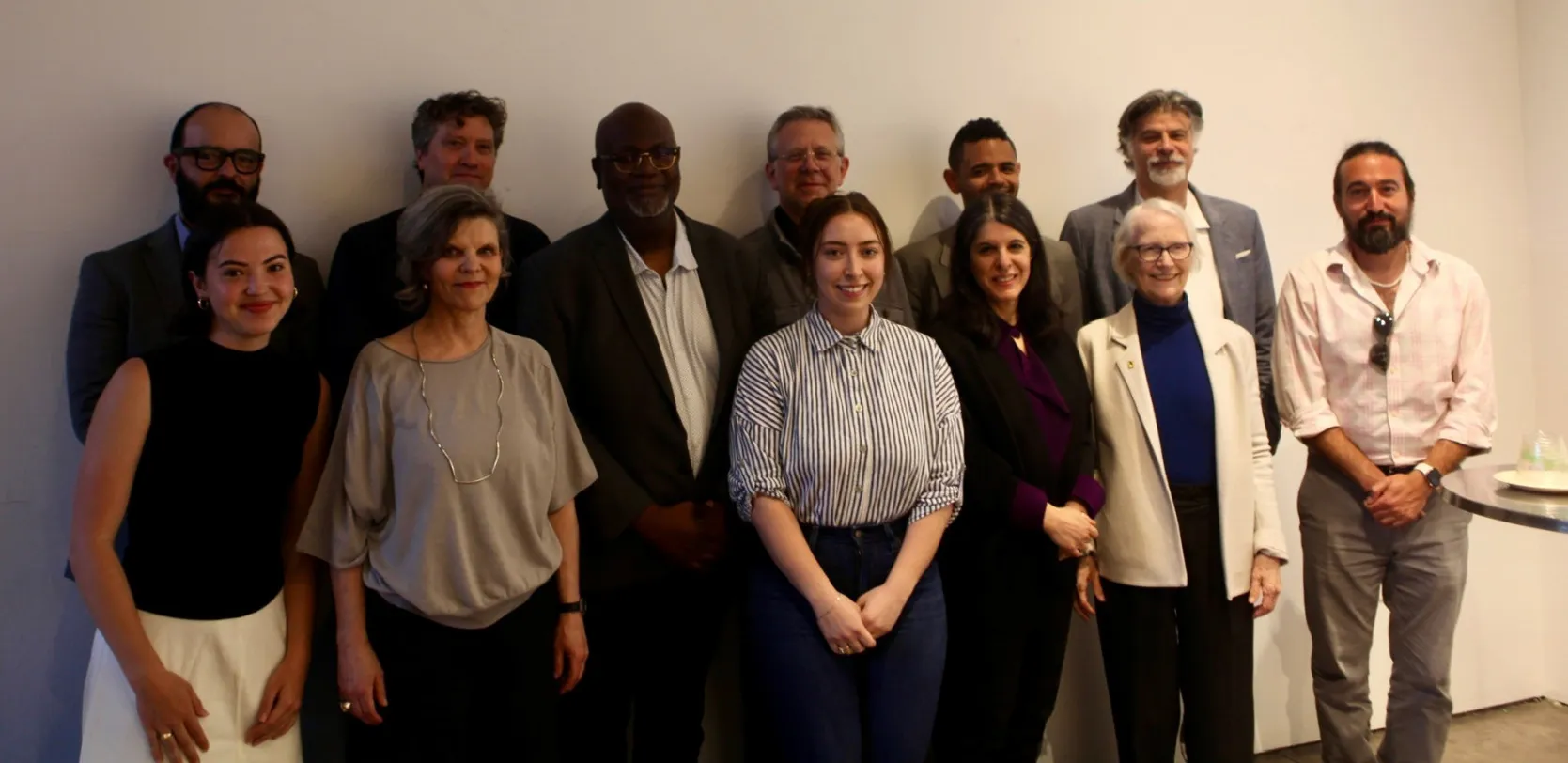
On April 15th, architects, planners, scientists,researchers, and city officials gathered at the American Institute for Architecture’s headquarters at the NYC Center for Architecture to celebrate the release of UCCRN’s Third Assessment on Planning, Urban Design, and Architecture for Climate Action (PAD).
On April 15th, architects, planners, scientists,researchers, and city officials gathered at the American Institute for Architecture’s headquarters at the NYC Center for Architecture to celebrate the release of UCCRN’s Third Assessment on Planning, Urban Design, and Architecture for Climate Action (PAD).
PAD draws on contributors from 23 cities across 15 countries to synthesize the latest research and practice on urban climate resilience. Centered on the deceptively simple challenge of translating climate science into the everyday decisions of the people shaping cities, the event initiated an open dialogue about professional obligation, community trust, and the gap between knowing what needs to be done and doing it.
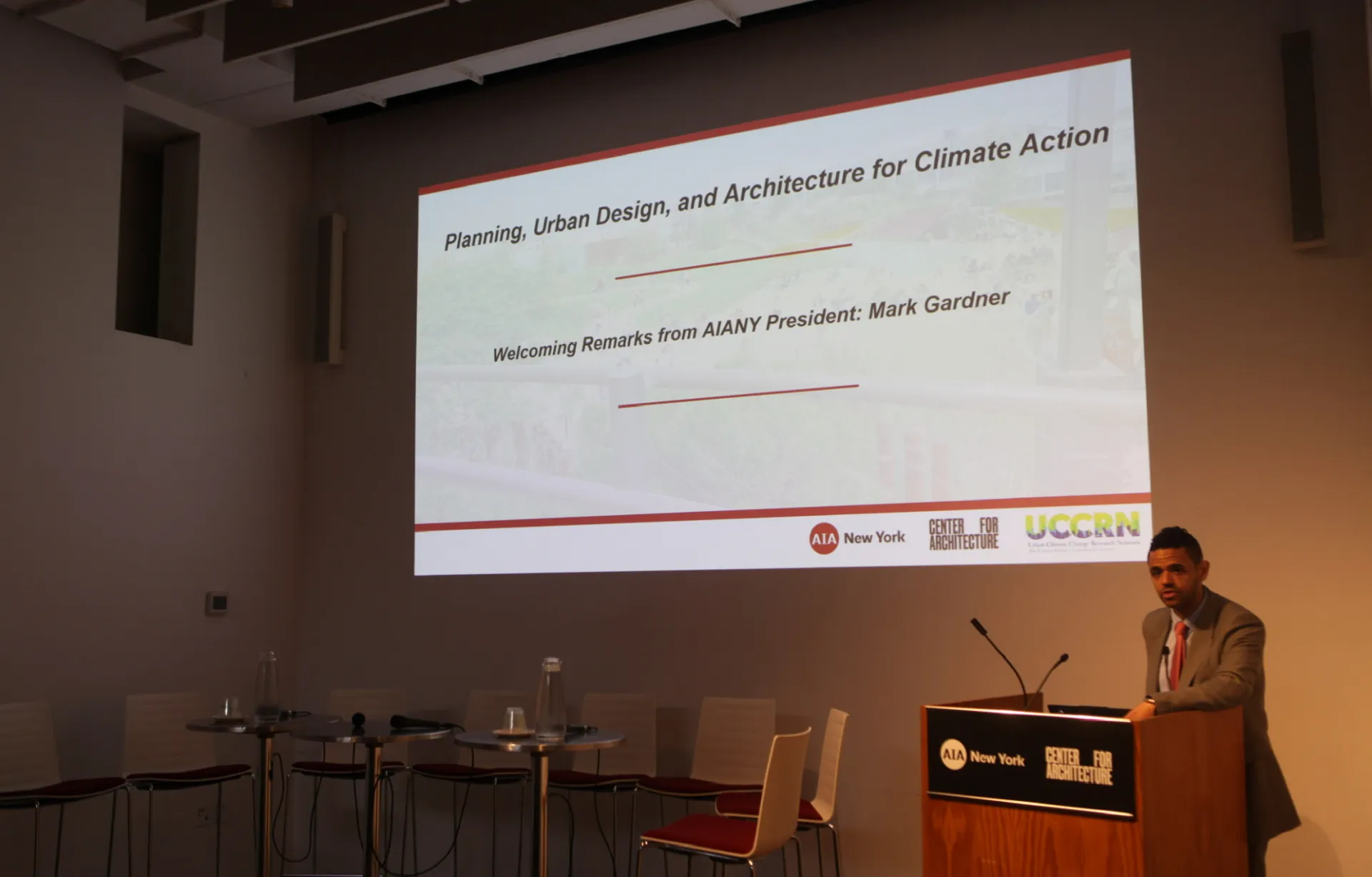
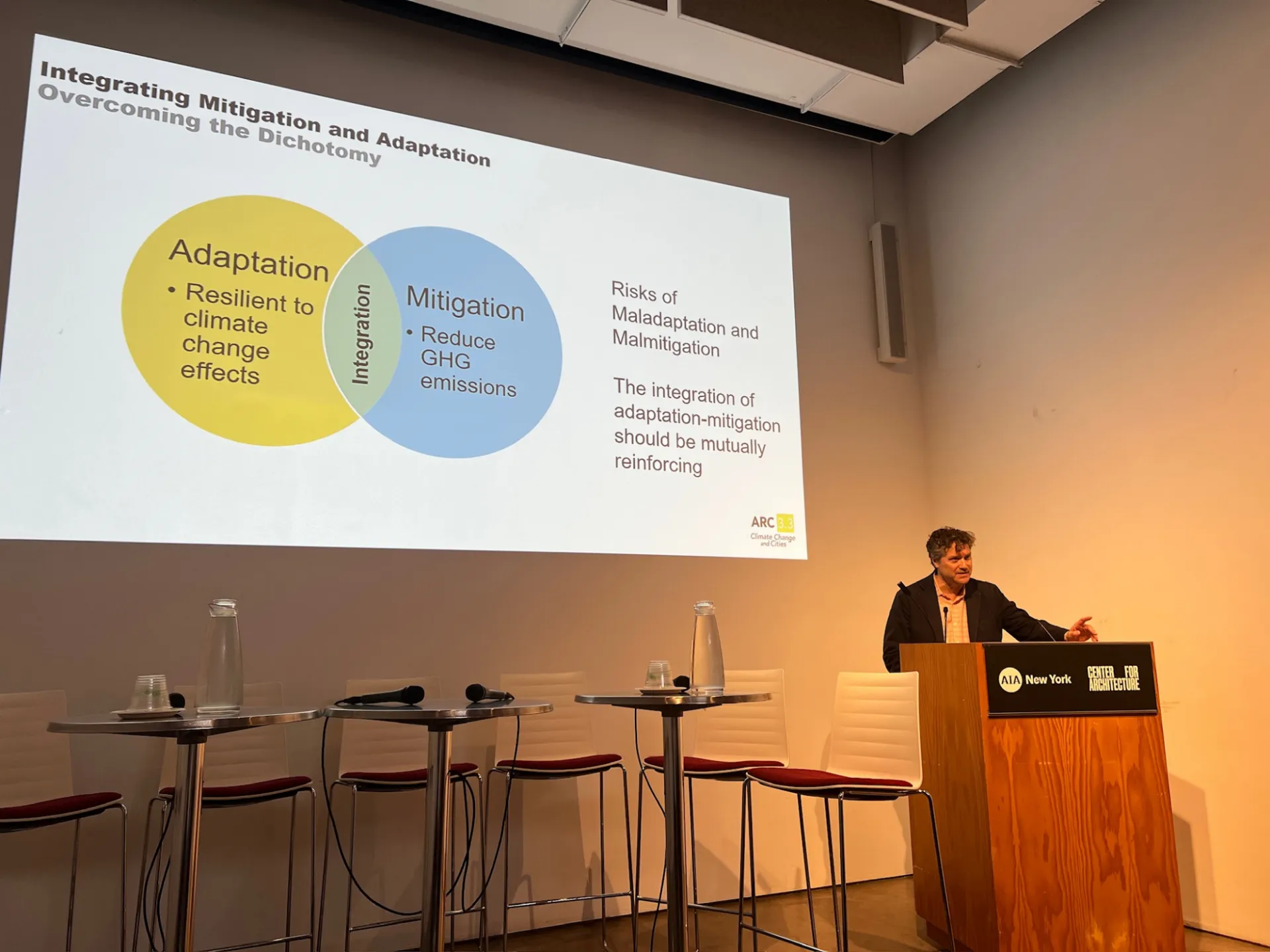
The evening opened with four presentations, beginning with welcome remarks from Mark Gardner, President of AIANY. Paul Onyx Lozito, Deputy Executive Director of the NYC Mayor's Office of Climate & Environmental Justice, set the tone for the evening with a call to action rooted in the city's current climate policy. Cynthia Rosenzweig – UCCRN Co-Director emphasized the role of PAD as a “manifesto” connecting climate research to climate action. Jeffrey Raven, Coordinating Lead Author of PAD (with Mattia Leone) summarized PAD’s Major Finding and Key Messages with several points for emphasis: Synergies between research and practice, integrating climate mitigation and adaptation and Urban Design Climate Workshops an innovative action-driven framework underway in global cities.
From Global Framework to Local Scale
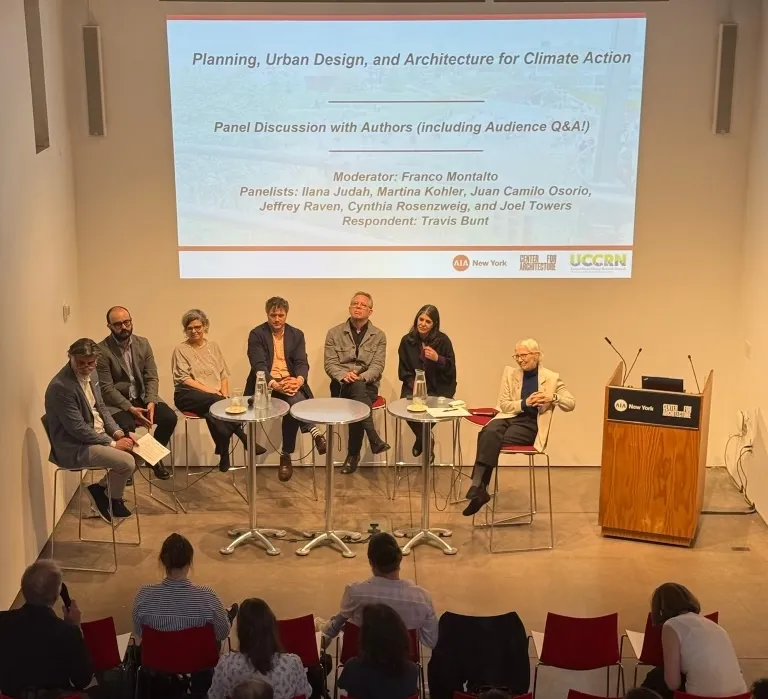
Following the opening remarks and overview of the Element, the evening moved into its central focus: a panel discussion featuring six contributors to PAD, moderated by Franco Montalto, Professor of Civil, Architectural, and Environmental Engineering at Drexel University and President and Founder of eDesign Dynamics LLC. Among the panelists was Joel Towers, President of the New School and Lead Author to PAD, whose presence underscored the event’s emphasis on bridging academic leadership, design practice, and climate action across disciplines.
The panel moved quickly from the global scope of PAD to the local challenges of implementation. Juan Camilo Osorio, Associate Professor at Pratt Institute, stated that climate action must happen simultaneously at every scale, and that we should not wait for crises to take action.
According to Osorio, community-based climate plans have been ready for nearly a decade, yet they remain largely unimplemented. He urged practitioners to use the research that has already been prepared and establish goals and milestones as early as possible, without waiting for a crisis to force a response. PAD should be used as a blueprint for this.
Getting Clients to Care
How do we convince clients, developers, or property owners to invest in climate resilience? Ilana Judah, a Lead Author of PAD, shared that the argument must be based around financial logic, not moral principles. To make clients care, the action must fit in one of three categories: save money, make money, and/or add value.
Martina Kohler, Director at Parsons School of Design and PAD contributing author, added an important caveat: what works in one neighborhood will not necessarily work in another. Social capital must precede financial capital through co-creation with the communities involved. This allows for the tailoring of different approaches for different communities, centered on their unique wants and needs.
Judah urges researchers to ask the community “the right questions,” listen to and synthesize the answers, and reflect them back to the community. Through this method, solutions should emerge through continuous dialogue between the planners and community members.
Who Decides and Who Pays?
Travis Bunt, Principal of Office for the Next Environment, was invited to serve as a respondent for the panel and bring the perspective of a practitioner working on climate-aligned projects to the table. Bunt remarked on the duality of learning to represent clients in the private and public sectors, arguing that researchers and academics are good at identifying problems, but are less adept at addressing them.
Furthermore, Bunt argued that there are significantly different timelines for public and private audiences, with a longer time horizon of 2040 or 2050 opening options for climate action. His charge for the panel was to develop an alternative argument for stakeholders so that it makes financial (not just ethical) sense to invest on a 10–20-year timeline.
Judah responded simply with one word: insurance. Cynthia Rosenzweig followed with two: extreme events. Combined, these pressures suggest the argument will soon be made by the market, without the architecture practitioner community getting involved at all. The question is whether the profession acts proactively or waits to respond until after the damage has begun.
Judah explains that insurance will soon become untenable, and finances will start to make decisions. However, in her words, “decisions come with options; we cannot enforce decisions, but we can provide good options.” This leads to the charge of the group present: create affordable, sustainable, and resilient solutions that are mindful of sustainability, communities, and the preservation of cities.
A Charge to the Profession
The PAD element teaches both researchers and practitioners to look for inspiration locally and allow this to precede any research. Even in a science-based world, engagement with people and their needs must precede any response or solution.
According to Jeffrey Raven, the “beauty tying practice to research is that there is a natural symbiotic relationship between the two.” Practitioners reveal gaps in research, researchers address these gaps, and the cycle continues.
Osorio notes that the researchers and academics, including those sitting in the panel during the event, should stay humble throughout the climate planning process and take the role as facilitators. As highlighted by Kohler, there is not one person, idea, or solution to address the impacts of climate change.
Concluding Remarks
The event would not have been complete without mentioning the importance of cities and education in confronting climate change. Explained by Towers, schools have the “potential to advance climate resilient and adaptive approaches across all projects and disciplines.”
Rosenzweig emphasized cities’ vital role in the integration of climate science into urban planning and policy. Towers scaled this down to New York City as an example, arguing that we need to re-think the entire city. While it is too late for a new climate-aligned master plan, we need to listen to stakeholders and respond at the scale demanded. This includes not being afraid of asking out-of-the-box, yet rational questions, such as why we continue to build in flood zones.
Raven concluded the event by emphasizing climate contributions unique to the fields of architecture, design, and urban planning: research-action prototyping, scenario modeling, interdisciplinary teaming, and communicating the process to a wide public. He encouraged the audience to share this publication with their network- city practitioners, urban decision-makers, researchers, and students- to amplify the reach of this unique body of work. He hopes that the legacy of PAD, and for the future of climate action in cities more generally, is that the tools, research, and frameworks already exist. What remains is the will to use them.
About the Event
PAD is the third Element of the Urban Climate Change Research Network's Third Assessment Report on Climate Change and Cities (ARC3.3), a global synthesis of the latest science and practice on urban climate change, developed to support more resilient, equitable, and sustainable cities worldwide.
Co-hosted by UCCRN, the AIANY Design for Risk and Reconstruction Committee, the AIANY Planning and Urban Design Committee and the AIANY Committee on the Environment the event included voices from city officials, academic researchers, engineers, and design practitioners, many of whom contributed directly to the PAD Element as lead authors, case study contributors, and the element shepherd.