
UCCRN Presents at the Innovate 4 Cities Conference in Nairobi, Kenya
From June 21st through June 24th, the Innovate 4 Cities conference brought together city networks, regional policymakers, international scientists, and planners in Nairobi to strengthen catalyzing actions needed for scaling up climate solutions. UCCRN representatives presented at this conference, sharing their work with a diverse audience and gleaning key themes for future work.
From June 21st through June 24th, the Innovate 4 Cities conference brought together city networks, regional policymakers, international scientists, and planners in Nairobi to strengthen catalyzing actions needed for scaling up climate solutions. The conference was co-hosted by UN-Habitat and the Global Covenant of Mayors for Climate & Energy (GCoM). It focused on developing solutions to mitigate and adapt to climate change in cities worldwide.
The conference was attended by over 2,000 people from 100 different countries. Among this widespread audience, UCCRN representatives both led and participated in discussions. On Monday, June 22nd, UCCRN’s session, "From Insight to Impact: Leveraging UCCRN Climate Knowledge and City Solutions” engaged over 75 attendees at the UN-Habitat Facility in Nairobi.
The session started with scene setting remarks by Maria Dombrov of UCCRN, who presented climate projections for Nairobi from the ARC3.3 Urban Climate Science Element. Benjamin Jance IV, Director of Climate Action Innovation, Research, and Impact for GCoM, then provided an opening keynote.
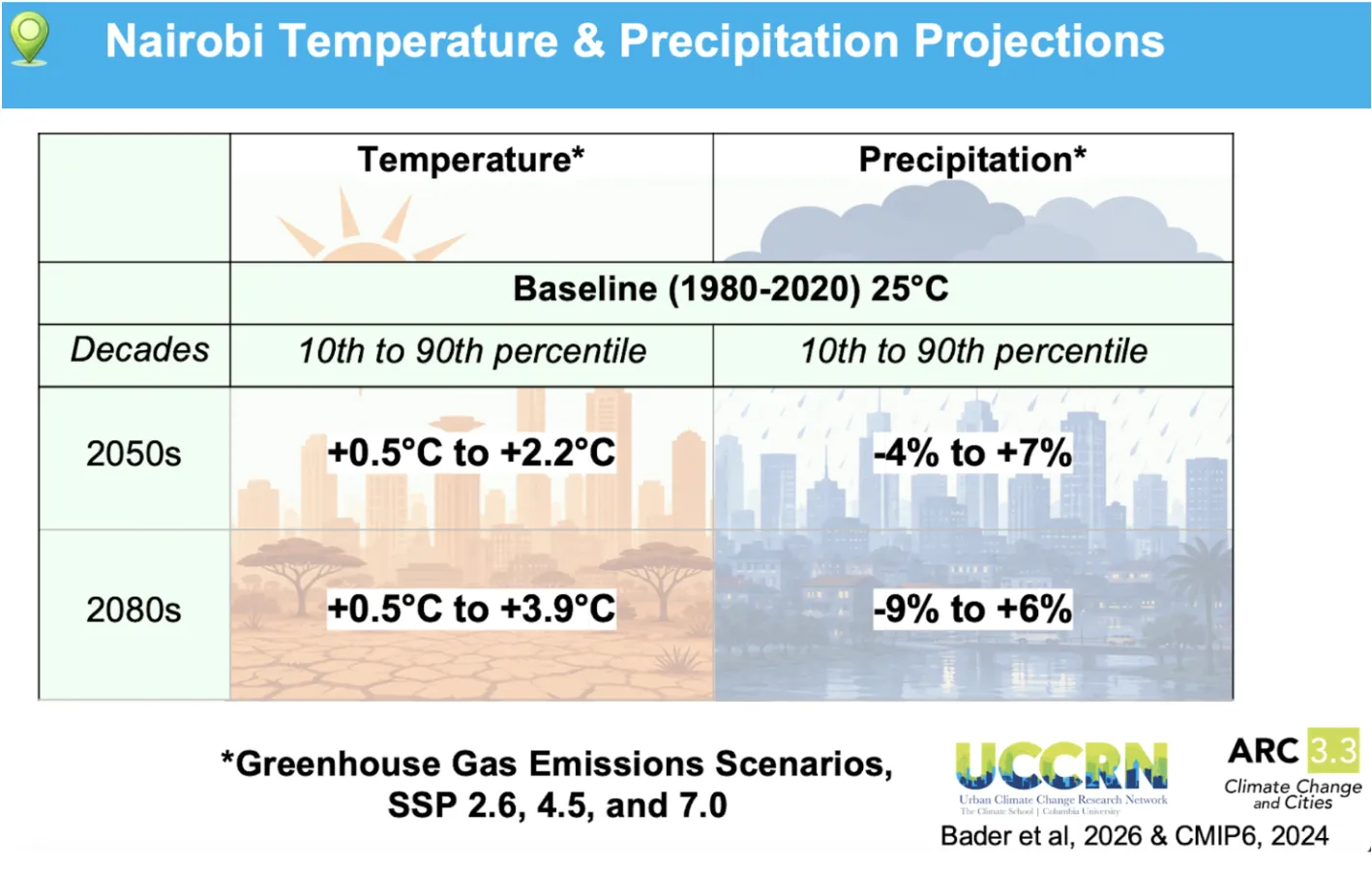
Nairobi climate projections, as presented by Maria Dombrov.
A panel discussion was then held with four esteemed panelists. Dr. Obakeng Molelu of the Western Indian Ocean Marine Science Association discussed her work with flooding in Mombasa, Kenya. Dr. Diana Reckien of the University of Twente reviewed key themes of the ARC3.3 Justice for Resilient Development in Climate-Stressed Cities Element. Dr. Gian Carlo Delgado Ramos of the National Autonomous University of Mexico and Dr. Nicola Tollin of the University of Southern Denmark shared about UCCRN’s City Solutions Case Study Atlas project. This panel was guided by Maria Dombrov, who then moderated an audience discussion.
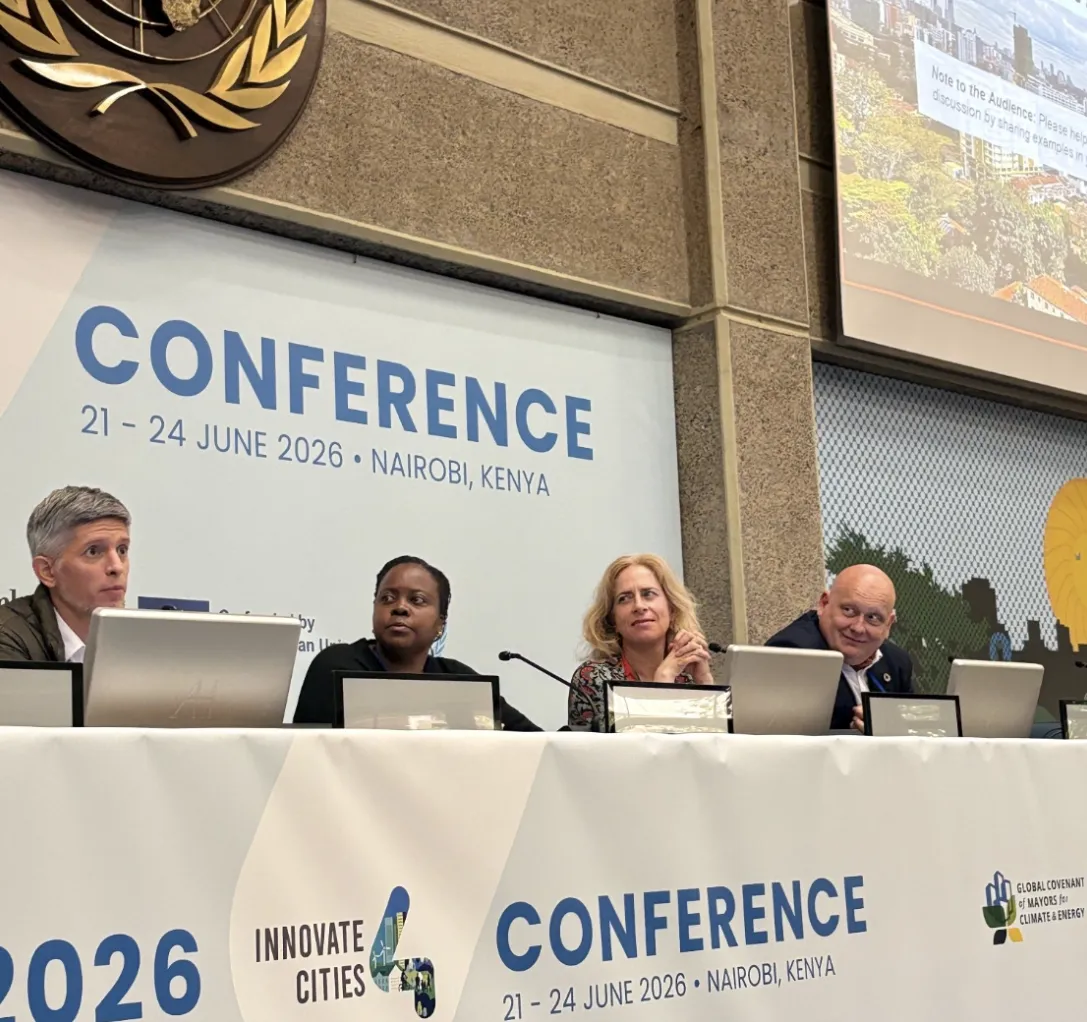
Panelists, from left, Dr. Gian Carlo Delgado Ramos, Dr. Obakeng Molelu, Dr. Diana Reckien, and Dr. Nicola Tollin, discussed international mitigation and resilience strategies for cities.
Throughout the session, certain key themes arose which are highly relevant to UCCRN’s future work. These are:
- Access to basic needs for urban residents increases a city’s adaptive capacity, resulting in advanced economic development.
- Community knowledge and stories are not optional, but are a vital aspect of planning and policymaking. Participatory engagement, co-creation, co-design, and Indigenous knowledge are foundational.
- Risk assessments provide critical knowledge of localized urban hazards.
- Case studies are historically relevant, as benchmarking knowledge serves to track a city over time.
- Climate strategy implementation is inhibited by visible and invisible structures of various systems.
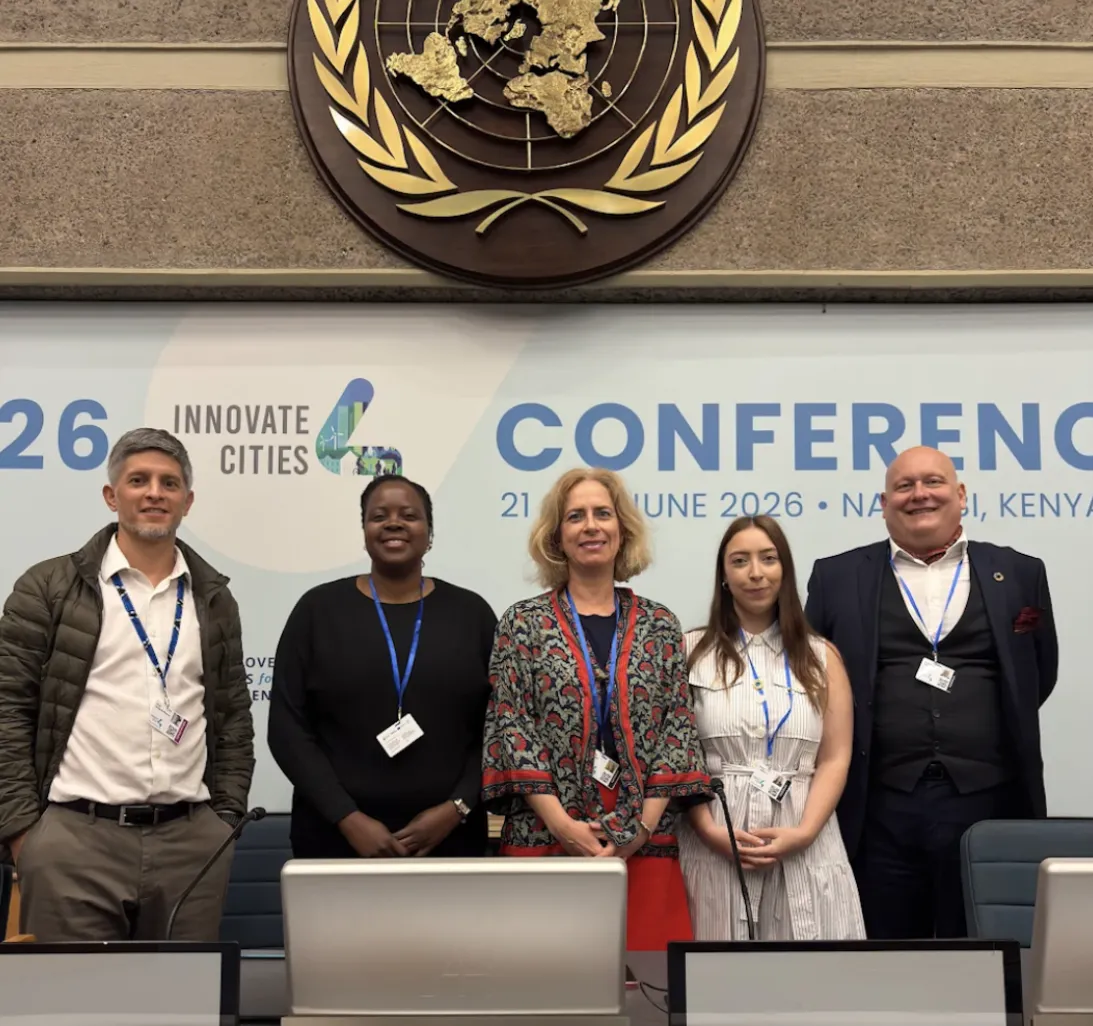
Panelists with Maria Dombrov.
These topics arose from active audience participation, and we thank everyone who attended the UCCRN session. Moving forward, the connections and themes from this conference will be used in UCCRN’s work to support resilient, decarbonized, and equitable cities throughout the world.